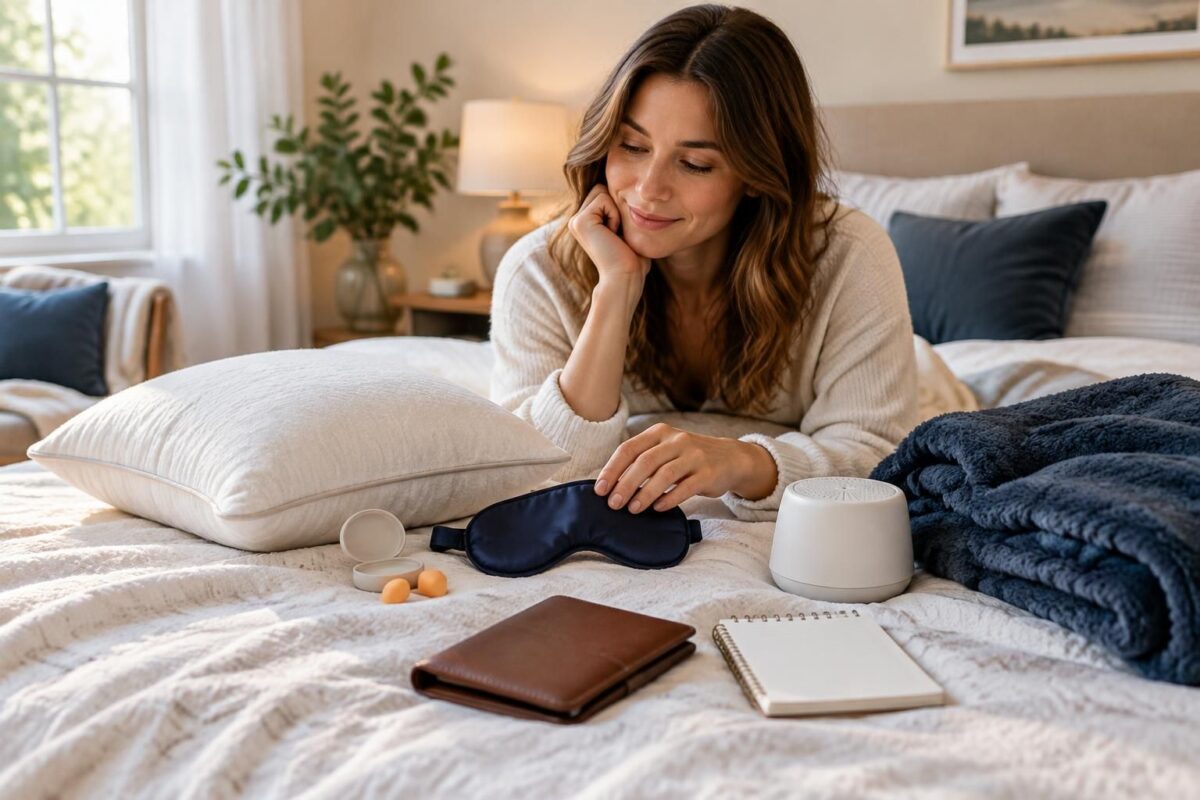
5 sleep accessory tips before spending too much too soon
Hello, this is Kiora. To choose sleep accessories without spending too much, start by identifying what is disrupting your nights, then try one purchase at a time. A sleep mask or earplugs can help with light or noise, but they are no substitute for suitable bedding or a regular routine. The right purchase is one that meets a specific need and genuinely improves your nighttime comfort.
Do now: five things to keep in mind before buying sleep accessories
- Note what wakes you up most often: noise, light, heat, or discomfort.
- First, check the condition of your pillow and mattress.
- Borrow or try an accessory before buying an expensive model.
- Compare materials, care requirements, and return options.
- Set a reasonable amount for your sleep budget.
A thoughtful purchase starts with a specific need, not an appealing promise. To help narrow down your options, see these guidelines on accessories that are genuinely useful before bed and on purchases you might regret.
5 tips for choosing useful sleep accessories
An accessory can support a good routine, but it won’t solve every nighttime difficulty on its own. Before placing an order, ask yourself what discomfort it should ease and whether a simpler solution is already available.
1. Choose a suitable pillow, not just a bulky one
An ergonomic pillow may be worth considering if you wake up with neck tension. Its height and firmness should suit your sleeping position and body type; a very firm model isn’t automatically right for everyone.
If your current pillow is still comfortable and supports your neck well, replacing it with a trendy model won’t necessarily make a difference. Prioritize a trial period and a clear return policy.
2. Try a mattress topper before replacing your mattress
A mattress topper can soften a surface that feels too firm and improve pressure distribution. However, it won’t fix a sagging or worn-out mattress. In that case, it’s better to assess the condition of the whole mattress before adding another layer.
Memory foam, latex, and natural fibers don’t offer the same feel or breathability. To avoid paying for a material that doesn’t suit you, compare the features and care requirements.
3. Block out light with the most practical solution
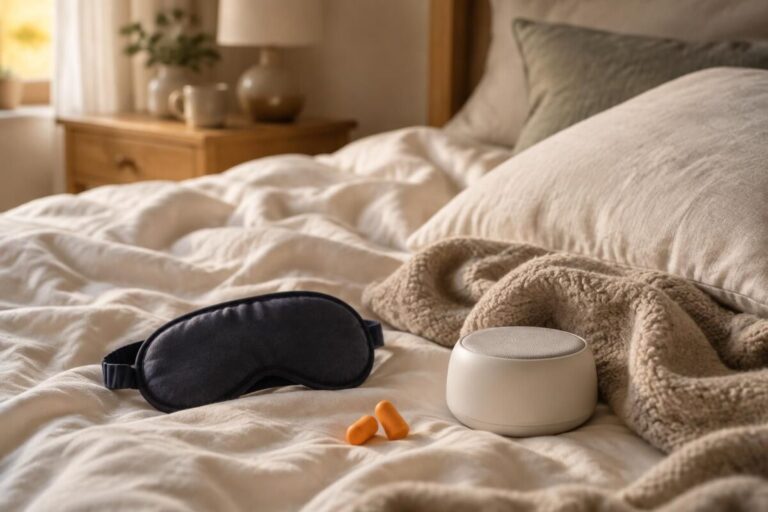
Blackout curtains are useful if light comes in through the window and you want to darken the whole room. A sleep mask is often easier to try, especially when traveling or if you can’t make changes to your bedroom.
Choose a soft, adjustable model that doesn’t put pressure on your eyes. Comfort matters more than performance claims: if the mask slips or feels uncomfortable, it may end up in a drawer.
4. Compare earplugs and white noise
Earplugs can reduce some outside noises, while white noise is designed to mask changes in sound. The best choice depends on your sensitivity and the source of the noise; you don’t need a device or an app if a simple solution is enough.
If the noise comes from a poorly insulated window, addressing the source may be more effective than accumulating gadgets. Also make sure the earplugs are comfortable and suitable for overnight use.
5. Adjust your bedding to the season before buying a new duvet
Breathable cotton or linen sheets can help when the bedroom is warm. In cold weather, a more insulating duvet or cozier sheets can improve comfort, as long as they don’t make you feel excessively hot.
A room temperature of around 18 to 19°C often works well, depending on your preferences and circumstances. Adjusting the temperature and bedding may sometimes help more than adding another accessory.
A comparison of accessories to find the right fit for your needs
Before choosing among sleep accessories, compare how useful they’ll actually be rather than how popular they are. This table can help you match each option to a specific problem.
| Accessory | Consider it if… | What to check before buying |
|---|---|---|
| Ergonomic pillow | You wake up with neck tension | Height, sleeping position, option to try it |
| Mattress topper | The surface feels too firm, but the mattress is still in good condition | Thickness, material, care, and return policy |
| Sleep mask | Light makes it harder for you to fall asleep | Fit, softness, and pressure around the eyes |
| Earplugs | Occasional noises wake you up | Comfort, size, and usage instructions |
| Season-appropriate duvet | You feel too hot or too cold during the night | Breathability, warmth, and ease of washing |
Decide based on your situation, then try it without rushing
If light is waking you up, start with an affordable mask, or blackout curtains if the light is coming through the window. If mattress discomfort is the main issue, check its condition first before investing in a topper.
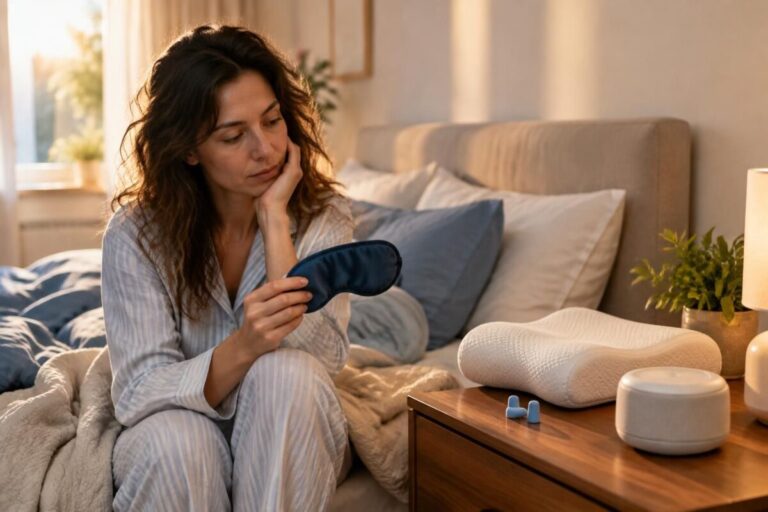
Here’s an example: someone who was feeling stressed tried a comfortable mask and a calming bedtime routine. The mask alone didn’t change everything, but together they made the routine easier to stick to.
“The best accessory is the one that meets a specific need.” This rule helps keep your bedroom from becoming a collection of gadgets and makes it easier to focus your sleep tips.
A three-step method for making a thoughtful purchase
- Step 1: For a few nights, note what makes it hard to fall asleep or causes you to wake up: noise, light, temperature, or support.
- Step 2: Choose one accessory to address that issue, and check the trial, return, and care options.
- Step 3: Try it for several nights, often between 5 and 14 depending on the model and situation, and keep it only if it genuinely improves your comfort.
This method gives you a practical accessory comparison based on your own nights rather than sales pitches. It also leaves room for essential habits: regular sleep and wake times, a bedroom that’s conducive to rest, and limiting screen use before bed.
Common questions before buying a sleep accessory
Which sleep accessories should I try first?
Start with the one that addresses the most obvious source of discomfort: a mask if light bothers you, earplugs if noise wakes you, or a suitable pillow if you feel tension in your neck.
Is a sleep mask enough to help you sleep better?
It can reduce discomfort caused by light, but it can’t replace a regular routine or a calm, comfortable environment.
How much should I budget for sleep accessories?
There’s no universal amount. Set a limit that suits your means, compare several models, and start with a simple option before considering a more expensive purchase.
Can accessories replace a good routine?
No. They can complement habits that promote rest, but they can’t replace a suitable sleep environment.
Thank you for your interest; Kiora