Sleep quality: earplugs, rest, or hidden discomfort
Hello, Kiora here. Earplugs can improve sleep quality if ambient noise wakes you or delays you from falling asleep. For a comfortable night’s rest, choose a suitable pair, insert them without forcing them, and keep them clean. Persistent discomfort when you wake up is a sign that you should switch to a different pair or take a break.
Do this now
- Identify the noises that disturb your nights and how often they occur.
- Try a pair designed for sleeping, especially if you sleep on your side.
- Wash your hands before handling the earplugs.
- Insert them gently without pushing them in deeply.
- Make sure you can hear your alarm, or have a backup plan.
If noise is disrupting your nights, earplugs can help promote restorative sleep, but they are no substitute for good sleep hygiene. To compare your options, see this guide to earplugs when you keep waking up and these tips on choosing between earplugs and an eye mask.
Earplugs: when quiet really helps
Snoring, traffic, or noise from neighbors can delay falling asleep and cause brief awakenings. Earplugs reduce some ambient noise: depending on the model and how well it fits, noise reduction can range from around 20 to 35 decibels.
They don’t create perfect silence and aren’t necessarily right for everyone. Their main benefit is making certain sounds less intrusive, helping to improve hearing comfort and reduce nighttime disturbance.
A tenant who could hear every scooter passing on her street tried foam earplugs during a period of construction work. She found it easier to fall asleep, but later chose a softer pair that was less uncomfortable when she slept on her side.
“The best earplug is one you forget you’re wearing without it hurting.” This simple guideline can help you choose: strong noise reduction is no use if ear pressure wakes you up.
Which material should you choose for comfortable sleep?
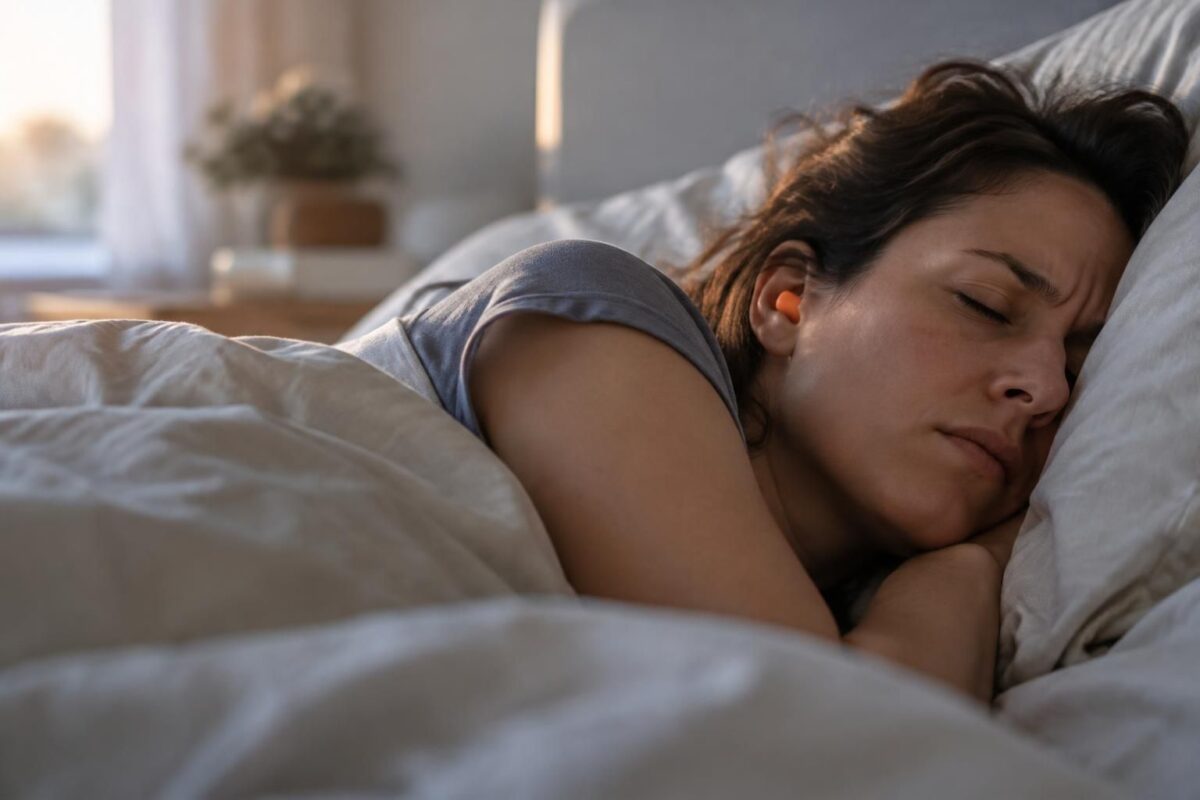
Foam is often easy to find and does a good job of reducing noise, but it can put pressure on your ear when you sleep with it against your pillow. Wax and soft silicone are generally placed at the entrance to the ear: some people find them more comfortable, though the level of noise reduction varies by model.
| Type | Main benefit | What to watch for |
|---|---|---|
| Foam | Often high noise reduction, affordable option | Can cause pressure and needs regular replacement |
| Wax | Moldable shape, placed at the entrance to the ear | May reduce loud noises less effectively |
| Reusable silicone | Flexible and reusable according to the manufacturer’s instructions | Requires cleaning and may not stay in place consistently |
| Custom-molded | Personalized fit for frequent use | Higher cost; professional advice can be helpful |
Prices and noise-reduction levels vary by model and situation. For regular use, compare comfort, care requirements, and fit rather than choosing based only on the advertised noise-reduction rating.
Wearing earplugs all night: useful precautions
Occasional use generally doesn’t cause problems if the earplugs are used correctly. However, wearing them very frequently can contribute to a buildup of earwax or irritate the ear canal, especially if the pair is dirty, damaged, or inserted too deeply.
Replace disposable earplugs according to the manufacturer’s instructions and clean reusable ones as recommended. If you have pain, discharge, a persistent feeling of blocked ears, or recurring infections, stop wearing them and seek medical advice.
If outside noise is waking you up, try suitable earplugs and also look for ways to reduce the source of the noise. If you have pain or irritation, remove them and don’t force them in.
How to insert them in three steps to reduce discomfort
- Step 1: Wash and dry your hands, then check that the earplug is clean and intact.
- Step 2: For foam earplugs, gently roll the plug between your fingers before inserting it. For wax or silicone designed to sit at the entrance to the ear, follow the manufacturer’s instructions.
- Step 3: Check that they feel comfortable and test your alarm before a night when it’s essential to hear it. If you feel pain or uncomfortable pressure, remove the earplug.
If complete silence makes you more alert to the slightest sound, you can try gentle background noise or improve your bedroom’s sound insulation. Earplugs are an accessory: on their own, they won’t resolve persistent sleep disorders.
Frequently asked questions about earplugs and sleep
Can you sleep with earplugs every night?
This may be possible if the pair is comfortable, clean, and used according to the instructions. If you experience pain, irritation, or recurring ear problems, stop using them and ask a healthcare professional for advice.
Can earplugs stop you from hearing your alarm?
They reduce sounds, and the result depends on the model, how they are inserted, and the type of alarm you use. Test them beforehand and consider a vibrating or light-based alarm if you absolutely need to wake up at a specific time.
Which type should you choose if you sleep on your side?
A soft, low-profile earplug may be more comfortable against your pillow. Try it for a few minutes in your sleeping position before wearing it all night.
What should you do if your ears feel uncomfortable when you wake up?
Remove the earplugs and don’t push them in any further. Switch to a different material or size if the discomfort returns; if you have persistent pain or a feeling of blocked ears, seek medical advice.
Thank you for your interest; Kiora