Sleep disorders: sleep mask or false relief
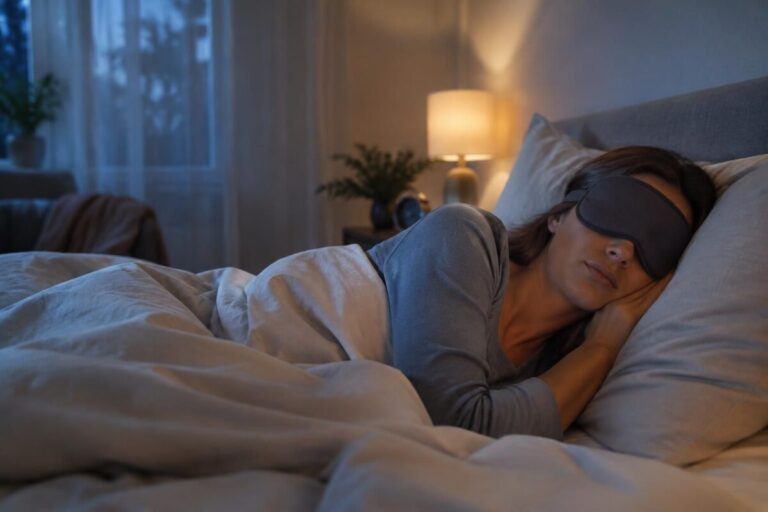
Hello, Kiora here. A sleep mask can reduce discomfort caused by light, but it does not, on its own, treat sleep disorders. Its usefulness depends mainly on your bedroom, your comfort, and the cause of your difficult nights. Research suggests a possible effect on certain memory tests, but not a general improvement in sleep quality.
Do this right away: try the sleep mask in the right conditions
- First, darken the room with shutters or curtains.
- Choose a mask that blocks light without pressing on your eyes.
- Try it for a few minutes in your usual sleeping position.
- Take it off if it gets hot, slips, or irritates your skin.
- Note whether light really bothers you before wearing it every night.
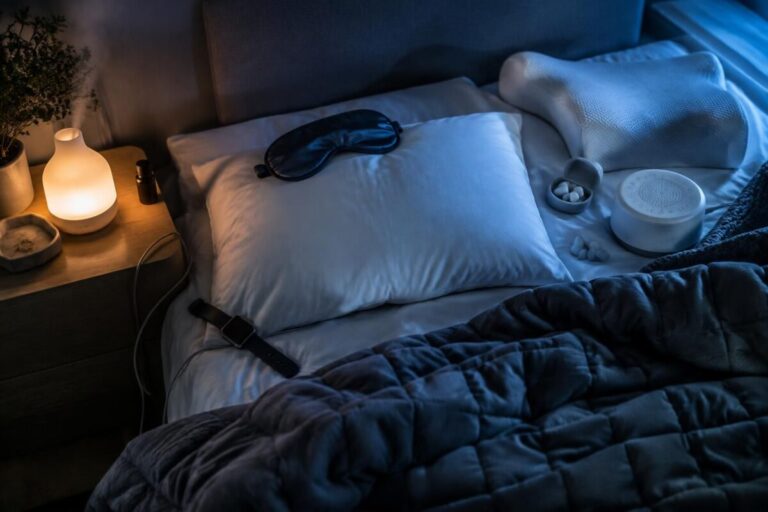
A mask is especially useful when light is difficult to control, for example while traveling or if your partner reads in bed. To compare its benefits and limitations, also see this guide to choosing a sleep accessory and these tips for keeping your bedtime consistent.
Sleep masks: what the studies really show
A study published in the scientific journal Sleep in 2023 examined the use of an eye mask by healthy young adults. Participants performed better on a word-association exercise after some nights wearing a mask, but this result does not mean that the accessory improves every night’s sleep or treats insomnia.
The researchers did not observe a significant improvement in sleep duration or perceived sleep quality. Contrary to some claims circulating online, no measurable increase in deep sleep was found in this study.
An alertness test also showed slightly faster responses in one experiment, but this effect was not found in the other. The reasonable conclusion is simple: blocking out light can be useful in certain situations, without guaranteeing restorative sleep.
A way to block light, not a miracle solution
A mask acts like a miniature curtain placed over your eyes. It can reduce light from a streetlamp, a screen, or the morning sun, but it does not correct an irregular schedule or other causes of sleep disorders.
“Ambient light can influence the timing and structure of sleep,” the researchers point out. This supports the value of a dark bedroom, but it does not make a mask a medical treatment.
When a sleep mask can make nights more comfortable
If residual light is keeping you from falling asleep, a mask can make your environment more conducive to rest. It can also come in handy on a plane or train, during a nap, or when you sleep during the day after working a night shift.
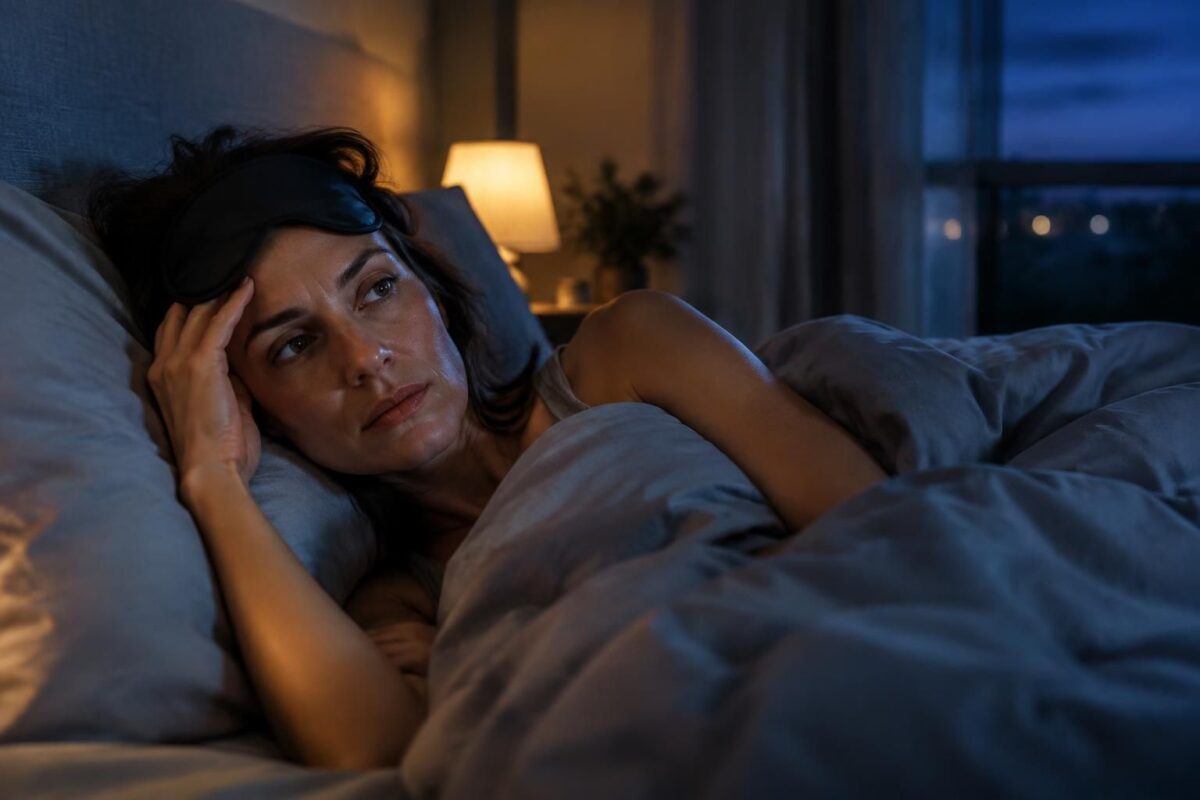
On the other hand, if the room is already dark and you still feel tired, the accessory may be a false solution. Your difficulties may be related to stress, an irregular schedule, pain, or a medical condition: darkness does not address all of these causes.
If light is what wakes you, first try blackout curtains, then a comfortable mask if the problem persists. If you have ongoing fatigue or significant daytime sleepiness despite getting enough sleep, talk to a healthcare professional.
Nadia, who used to wake at dawn because her curtains were too thin, tried a soft mask for a few nights. She especially appreciated no longer being disturbed by light, but did not find that her other awakenings had gone away.
| Situation | What the mask may do | Keep in mind |
|---|---|---|
| Morning light or light from a screen | Reduce the amount of light reaching your eyes | Blackout curtains may be more comfortable |
| Travel or a daytime nap | Quickly create darkness around your eyes | It does not block noise or movement around you |
| Already-dark bedroom | Little additional benefit is expected | The cause of your awakenings may lie elsewhere |
| Ongoing insomnia | An additional aid if light is also a problem | A mask is no substitute for a medical evaluation |
Choosing a comfortable, well-fitting mask
The right model blocks light without pressing on your eyelids or tightening around your temples. Pay particular attention to the space around the nose: a gap there can let in a ray of light, even if the fabric seems opaque.
Lie down with your pillow and try the mask in your usual position. If you sleep on your side, the strap may press against your ear or temple; a flatter model or a wider band may be more comfortable.
Silk, cotton, and synthetic fabrics have no proven therapeutic advantage over one another. Choose a material that feels good against your skin and read the care instructions: some models should be dry-brushed rather than washed with water.
A simple three-step process
- Step 1: reduce the light in your bedroom by closing the shutters and moving bright screens away.
- Step 2: try the mask for a few minutes, then check that it stays in place without painful pressure and that no light comes in around your nose.
- Step 3: observe over a few nights whether the light bothers you less. Keep the mask only if it remains comfortable.
To support good sleep habits, also keep a regular schedule and dim the lights in the evening. The mask comes at the end of this routine: on its own, it cannot make up for late-night screen use or a highly variable bedtime.
When a mask is not enough to address sleep disorders
Take off the mask if it causes irritation, excessive warmth, or pain around your eyes. Do not keep it on when getting up in the dark: remove it before walking to protect your vision and safety.
If insomnia, fatigue, or difficulty concentrating persists, do not keep adding accessories in the hope of solving the problem. A blackout mask is no substitute for medical advice or a CPAP machine prescribed for sleep apnea.
The priority is still to understand what is disrupting your nights. A mask has its place if light is a real obstacle; if it is not, it is better to look for another explanation.
Frequently asked questions about sleep masks
Can you wear a sleep mask all night?
Yes, if the model is comfortable and you follow the manufacturer’s care instructions. Take it off if it feels tight, irritates you, or bothers you during the night.
Does a mask improve sleep quality?
It can reduce discomfort caused by light, but the available data do not show a general improvement in sleep duration or perceived sleep quality.
Is a silk mask more effective than a cotton one?
No therapeutic advantage has been established. Prioritize comfort, effective light blocking, and care requirements that fit your habits.
Can a mask replace treatment for sleep apnea?
No. A blackout mask blocks light; a CPAP mask is connected to a machine prescribed to treat sleep apnea. Never change a treatment without medical advice.
Thank you for your interest; Kiora