Sleep Accessories: Which One Really Helps You Sleep Better?
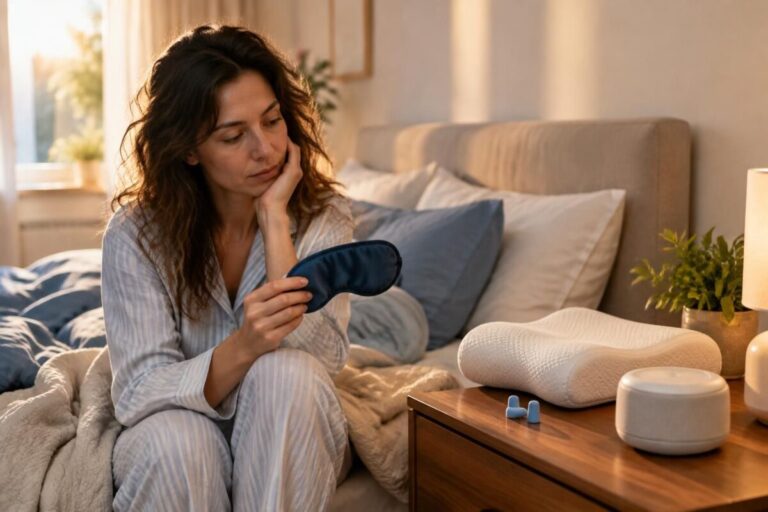
Hello, this is Kiora. The best accessory depends on the problem: choose a mask to block light, earplugs to block noise, or a suitable pillow if your posture is bothering you. One item won’t fix everything, but it can reduce a specific obstacle and improve your sleep quality.
What to do right away
- Identify what’s disrupting your nights: light, noise, heat, or discomfort.
- Try a simple solution first, such as a sleep mask or earplugs.
- Make sure the accessory doesn’t feel tight or restrict your movement.
- Keep the temperature comfortable and air out the bedroom before going to sleep.
- Monitor your sleep for a few days before buying more expensive equipment.
To compare options without buying too many things, check out these tips on accessories to try before spending money and on sleep purchases that are genuinely useful.
Which sleep accessory should you choose for your problem?
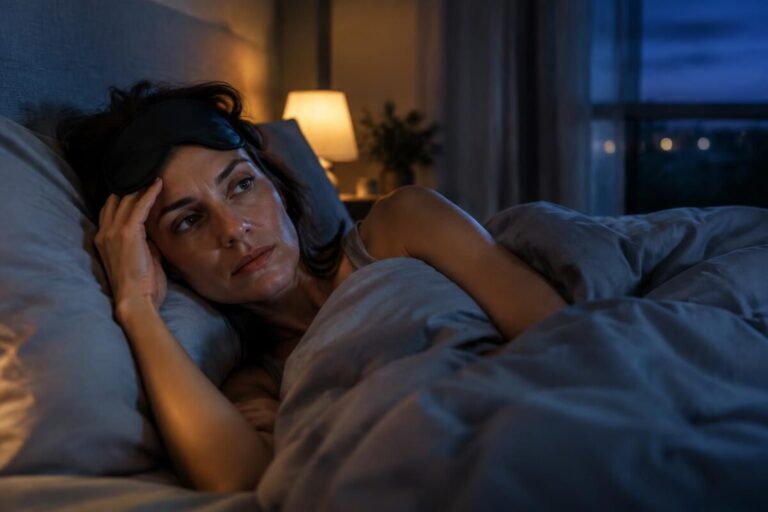
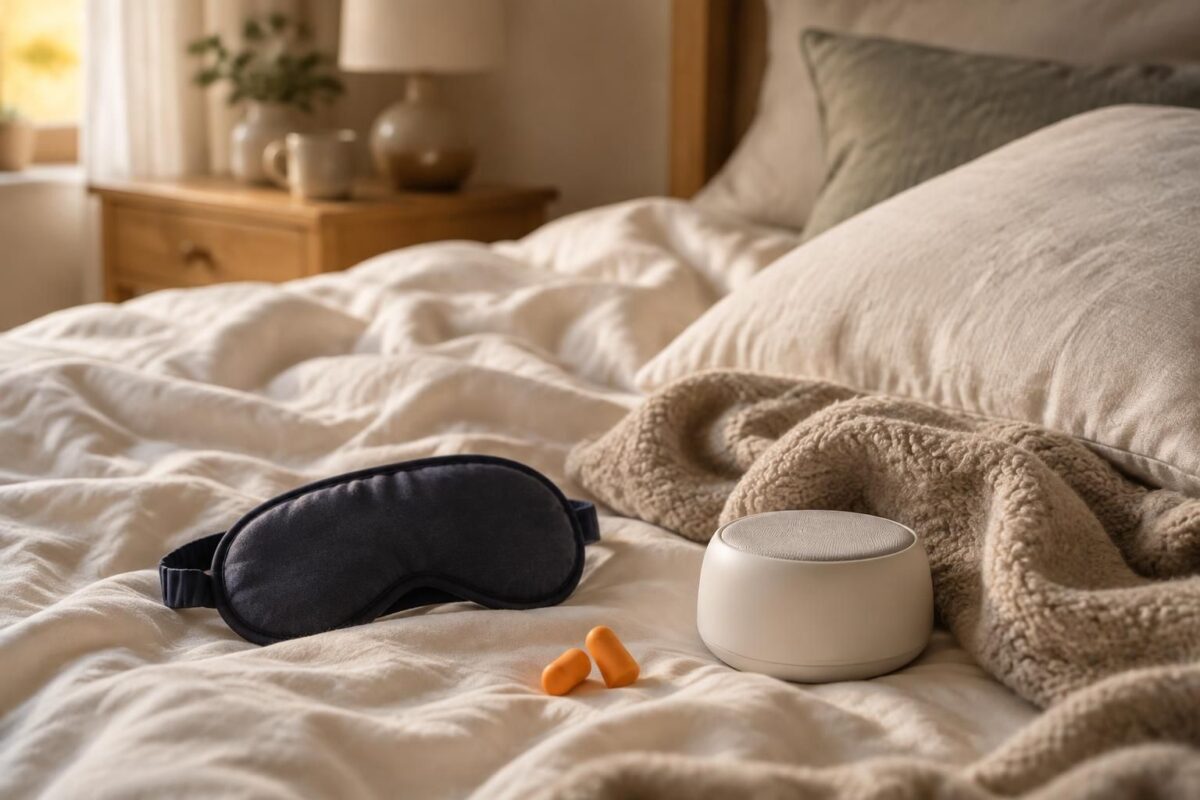
An accessory is most helpful when it targets a specific discomfort. A sleep mask can be useful if a streetlamp or the first light of day wakes you up. Blackout curtains are another option for blocking light throughout the room.
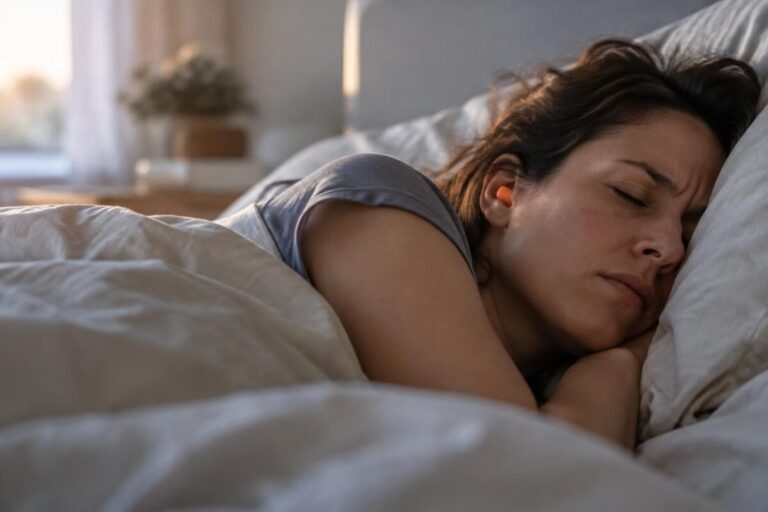
If noise wakes you up, earplugs can reduce ambient sounds. Choose a comfortable material and follow the hygiene instructions: prolonged or improper use can contribute to earwax buildup.
An ergonomic pillow can provide better support for your head and neck, as long as it suits your sleeping position. If you have persistent pain, it’s better to ask a professional for advice rather than relying solely on a new pillow.
Noise, heat, and relaxation: aids that can complement your routine
A white noise machine plays a steady sound that can mask some irregular noises. Start at a low volume and use a timer if continuous sound bothers you. An app may be enough to try it out before buying a dedicated device.
When the air is dry, a humidifier can improve comfort, provided you clean it regularly and follow the manufacturer’s instructions. An essential oil diffuser isn’t essential: some scents can be bothersome or trigger symptoms in people who are sensitive to them.
A wake-up light gradually simulates dawn to help you wake up. It can be useful if you have trouble getting up in a dark room, but it won’t make up for going to bed too late or not getting enough sleep.
A short anecdote shows why it’s worth starting small: someone bothered by a streetlight first tried a mask before changing their curtains. “The right accessory is the one that addresses the discomfort you actually experience.”
Weighted blankets, pillows, and connected accessories: what should you know?
A weighted blanket provides a cocooning sensation that some people enjoy. However, it can feel warm and be difficult to move. The weight should feel comfortable, and it isn’t suitable for everyone; ask a healthcare professional for advice if you have a health condition or if it’s for a child.
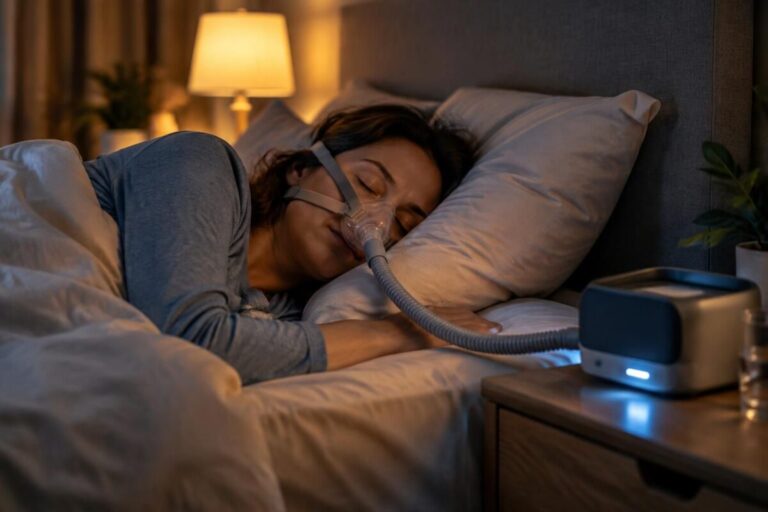
Connected devices and sensors can track nighttime indicators, but their data is no substitute for medical advice. If you snore heavily, stop breathing during sleep, or wake up exhausted, talk to a healthcare professional.
If light is keeping you from sleeping, try a mask or blackout curtains first. If it’s noise, try suitable earplugs or continuous sound at a low volume.
Compare sleep accessories before buying
Prices vary depending on the material, finish, and model. The price ranges below are approximate: compare the features and check the trial terms before making an expensive purchase.
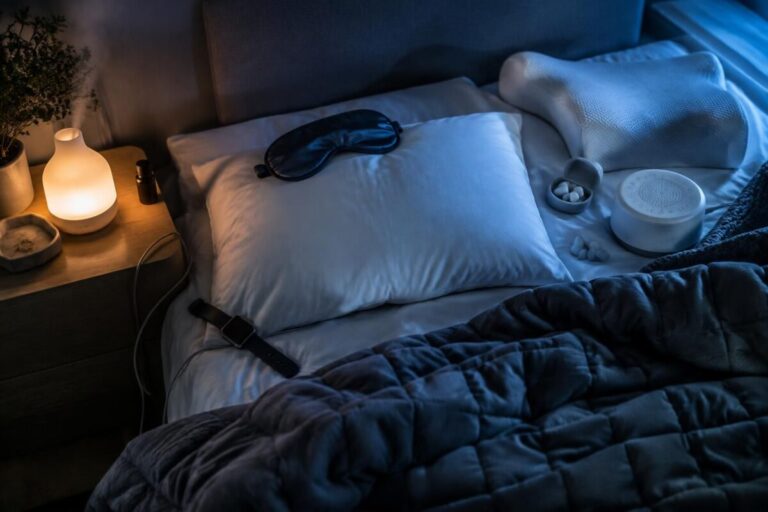
| Accessory | Most useful for | What to check | Indicative price |
|---|---|---|---|
| Sleep mask | Light and travel | Fit, material, space around the eyes | About €5–€50 |
| Earplugs | Ambient noise | Comfort, size, care | About €1–€20 |
| Ergonomic pillow | Head and neck support | Sleeping position, height, trial period | About €40–€200 |
| White noise machine | Irregular sounds | Volume control, timer | About €30–€150 |
| Weighted blanket | Seeking a cocooning sensation | Weight, warmth, ease of removal | About €50–€300 |
A simple way to test an accessory
- Step 1: for a few nights, note what wakes you up or delays you falling asleep.
- Step 2: choose an accessory that targets this discomfort, without changing several things at once.
- Step 3: observe its effect and keep it only if it improves your comfort without causing a new problem.
This method helps you avoid accumulating items and distinguish a real benefit from the novelty effect. The goal is to make your routine more comfortable, not to turn your bedroom into a laboratory.
Frequently asked questions about accessories for better sleep
Which accessory should I choose for sleeping in a bright room?
Start with a comfortable sleep mask. If the light comes from the window, blackout curtains can also darken the whole room.
Are earplugs suitable for every night?
They can help with noise, but choose the right size and keep them clean. If you experience irritation or earwax buildup, stop using them and ask a professional for advice.
Does a white noise machine necessarily improve sleep?
No. It can mask bothersome noises for some people, but the volume should be kept low and continuous sound isn’t suitable for everyone.
Is a weighted blanket suitable for everyone?
No. It may be too warm or uncomfortable and is not a substitute for medical care. Make sure it can be removed easily, and ask for advice if you have a health condition or if it’s for a child.
Thank you for your interest; Kiora